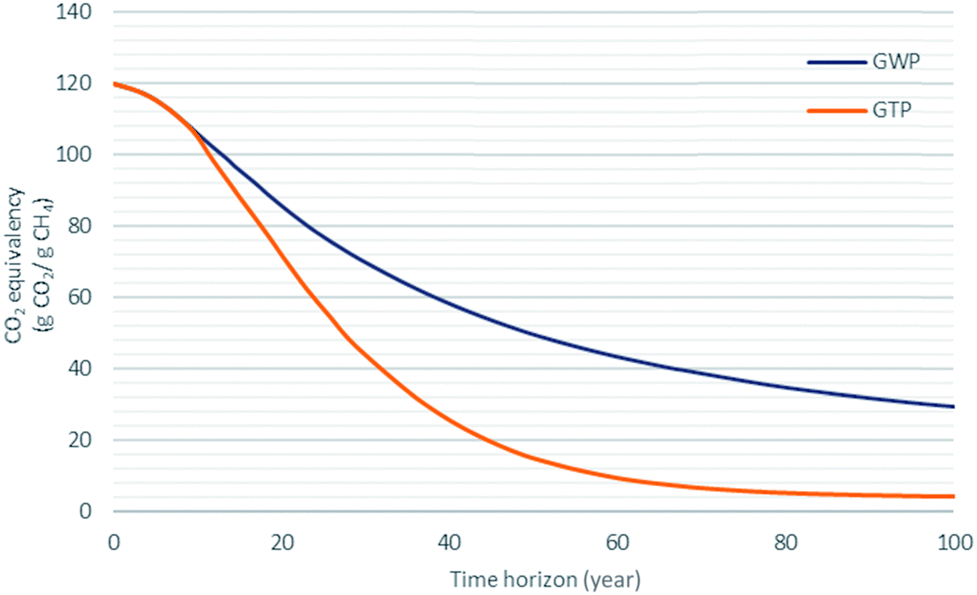
When methane is released, each molecule casues 120x more warming than a CO2 molecule. As it decays (with a half life of ~10 years), it falls exponentially towards a floor of 2-4x worse than CO2 (it's 4x after 100 years and continues to decay from there). This is called Global Temperature Potential (GTP).
Even after 50 years, it's "only" 10x worse than CO2.
GWP is the average for all years, compared to CO2. For methane, most of this is contributed within the first 20 years after release. GWP is primarily useful for estimating the effect of constant steady state emissions. For instance, if we emit both methane and CO2 at constant rates from now to 2122, the heating from the methane is about 25x worse than from CO2. (CWP100=~25). (calculating this gives the same integral as averaging over 100 years).
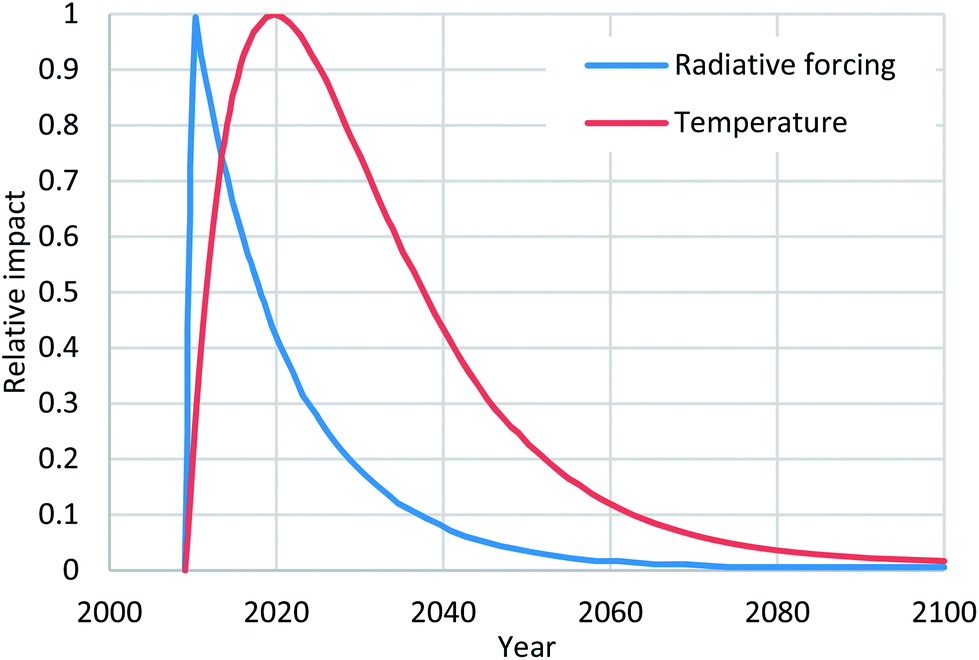
However, if we're not looking at constant emissions, but instead large bursts where all the gas is released at once, it makes more sense to use the GTP curve.
Edit: strictly speaking, the above reasoning assumes the Earth cools rather quickly. Actual cooling once heat has been trapped can be 10-20 years, however, meaning the maximum temperature is reached about 10 years after the release, and it will take 20+ years for all the heat to escape Earth after the methane itself is gone.