Am I just cynical or were there some troubling cuts in this video? For example the camera cuts once right before he attempts the stopping distance test, and again right before he goes into a pothole on the street
I noticed that too. Almost no videos of him stopping. Even with a normal "fast walk" pace it can be a problem slowing yourself down on a sidewalk if someone unexpectedly turns or if you didn't see the pile a dog owner (or from a human in SF) didn't pick up in front of you until its too late.
It's also troubling that you have to "signal" the boots to turn into "lock mode" for stairs. Seems like potential for user error there as you have to slow down, then awkwardly turn your foot in just the right way in order to start your ascent on the stairs. To be fair it looks like you wont necessarily slip if you dont engage the "lock mode" but it also seems weird that a lock mode would even be necessary.
The main thing that separates speed walking ("race walking") from running is that you must always have a point of contact with the ground.
That said, I've seen some articles of high speed video taken of pro race walkers and basically all of them have tiny moments where both feet are off the ground. Just not egregious enough for a referee to detect.
In general, seems like a really contrived sport, but to each his own...
I once read an interview with a writer/producer on Malcolm who said early on they realized there wasn't anything Bryan Cranston wouldn't do. They specifically tried to come up with things for Hal to do to challenge Cranston, and he never said no.
$1400 doesn't seem that bad for the very first product of this type compared to other e-mobility stuff. E-bikes can cost around that price point (and way more of course) and they're a mature category. Scooters are much cheaper of course, but again, this is the first product of this type.
There are other requirements: the lead knee has to be straight from the moment the foot touches the ground to when the knee passes under the body. (or something like that)
Yeah it was impressive. The reviewer was comfortable very quickly and was able traverse real city streets without incident. It looks a really clever design.
I was wondering how they could traverse rough terrain like gravel. That video explains how the overlapping wheels makes that possible. Why not go with a "tank tread" type design? Maybe in a future hiking version.
I'm assuming different wheels are accelerating at slightly different speeds so you aren't hitting the pavement with a tread going at full speed. It needs to adjust to the different speed of your gait at different points of your step.
That's why the "tank tread" likely wouldn't work here.
No. There's a lot of climbing up stairs, pulling on things, and stopping quickly to stay out of the way of multi-ton vehicles with dangerous pointy things on the front (forklifts). Your feet hurt enough walking on miles of concrete all day, these would not even pass safety standards, falling is already too much of a hazard to want a fancy roller skate on one's feet.
Was surprising to see how quickly the host figured out how to walk in them. I thought there would be a massive learning curve but he seemed like he was able to hit real streets (with potholes/bad paving) pretty quickly and confidently!
They are doing the usual lie of saying 250% increase when they actually meant 70-180% increase. The first Google result for "walking speed"[1] refers to CDC for "2.5 to 4 mph"[2]. The Moonwalkers specs[3] say "Top Speed: 7 mph", which is a 180% increase (2.8x) over 2.5 mph and a 70% increase (1.7x) over 4 mph.
Something that is 50% faster, is in fact only going half as fast according to you? My car is 1 times faster than yours so it's so much faster that it isn't faster at all. It's just as fast.
I parse "N% faster" as "N% more fast" as in "delta is positive and N% of base". I parse "N times (or Nx) faster" as "ratio of after/before is equal to N". So "50% faster" is equivalent to "1.5 times faster". I genuinely don't understand the point you're making.
N% more fast and X times more fast are equivalent.
10% more fast is 1.1 times more fast. 50% more fast is 1.5 times more fast. 100% more fast is 1 times more fast. 200% more fast is 3 times more fast. N% more fast is 1 + N / 100 times more fast. Change factor.
100% more fast is 1 times more fast. This is mellanstadiematte in Sweden. We do this when we are 10-11. I'm guessing you did too.
1 times faster doesn’t make sense. “Faster” implies one thing is “more fast” than the other. 1 times faster actually means “as fast” so faster isn’t an appropriate word to use. That’s where your confusion is coming from.
The rule is X is N times faster than Y means speed(X) = N * speed(Y). Read “N * speed(Y)” out loud: “N times the speed of Y”.
Many of the critical comments here seem to focus only on the high price for these devices, but what about the clunkiness factor?
- These "shoes" weigh in at 4.2 lbs each, which IMO makes it prohibitively tedious to deal with. In comparison, a typical cushioned running shoe weighs in at around 11 ounces.
- The extra height off the ground results in a loss of stability and, consequently, a loss in dexterity.
- It seems to function best when moving in a straight line, but impractical otherwise (like turning a corner).
Perhaps there will be improvements to address these issues in later iterations, but if the novelty isn't that big a deal, you may as well just get a pair of rollerskates.
> - These "shoes" weigh in at 4.2 lbs each, which IMO makes it prohibitively tedious to deal with. In comparison, a typical cushioned running shoe weighs in at around 11 ounces.
Dunno, people have marched in terrain plenty long in pretty heavy boots and strapped full of equipment. Turns out leg muscles are pretty strong and when you walk on flat surfaces you really don't lift your feet very much.
Another factor to consider is that walking that much faster than average traffic is difficult in dense place. While I don't have a measurement, I typically walk ~twice as fast as the average speed on the street. I once was walking in a very crowded bridge in Hong Kong, and the "friction" I can from the surrounding traffic is tremendous, not to mention you need to be very agile in these situations to not get any trouble.
Also, I wonder if anyone really need this tool to walk 2.5x faster. May be because I have long legs, but I found that open up the legs (the angle of the swinging motion) and increasing frequency can already speed up a lot without being too tiring (bigger angle is easier than higher frequency.)
Another small tip is to consciously use the calf muscles to push off at the end of each step. Perhaps others already do this but for me it's about a 20% speed increase without changing anything else.
This is interesting. They look like roller skates/blades, but if there's really that much tech, they might be easier to use. It's too costly for most, but if they catch on the price could come down.
Bike have advantages, but take up a lot of space at their destination.
Their closest competitor (beyond walking/running) appears to be foldable electric scooters. They take less space than a foldable scooter, but I'm not sure they take up that much less space, and I expect scooters to be able to go further on a charge. It does look like the moonwalkers are much easier to use when switching to/from stairs. Whether or not that matters depends on how often you encounter stairs.
Skateboards are a competitor. They are pretty common as a last mile choice in california, and I see even older people riding them on occasion (I assume they've been on a board for 50 years by now). They are better than the scooter on the train. Most people I see with electric scooters on the train don't bother folding it up or they buy these huge ones that I'm not sure even can, so you have this big 4 foot long obstruction that you might not see until you rack your ankle into it. My skateboard on the other hand, I just stick in between my legs if its tight on the train, and throw it under a desk at work. Sure, there's a learning curve with skateboards, but I'm sure these have one too.
I've always been interested in trying skateboarding, but my balance is absolutely miserable (due to a vestibular injury), so I sort of just know better than to try. Balance declines for a lot of people naturally with age, so that's one reason you might not see fogies on skateboards.
These shoes look more doable to me. I can't help thinking they're still not really a great idea for anyone with balance / reaction speed / other issues, though. Slamming into a wall or nearly falling while at normal walking speed isn't a big deal, but doubling the speed changes the equation.
Another issue is the desire to appear dignified... tough to do on a skateboard. Nigh-on impossible on a Segway. These shoes? Not sure, but they do look a bit silly.
Traditional roller blades would be a pretty close competitor. Replace the slight inconvenience of having to charge them with the slight convenience of having to learn how to skate. Skateboards and longboards would be other options.
As an avid inline-skater, another con to inlines is that they can be quite the hassle to put on and take off. And when going inside a building, you have to stuff them in a large enough bag or tote them around. If you're using them to get to another destination, you'll also need to carry around your shoes (and a fresh pair of socks) the entire time. Being able to simply strap in the shoes you're already wearing is pretty enticing.
Well, I take your point, but then would question what you're going to carry these around in that's less obtrusive than an average-to-large-ish backpack. An undoubtedly super trendy fitted fannypack?
Most public buildings will throw you out if you wear a pair of rollerblades indoors. With the lock-mode, these looks like they can pass under the radar more easily, reducing the need to stow them in your bag as often. In the best case never, until you reach your final destination where you can store them safely and for the rest of the day, keep using the shoes you already wear.
I would be shocked if they had zero learning curve to be honest. It's an awkward movement on a vehicle you aren't used to. People would wipe out bad when escooters hit the scene too, and they supposedly don't have any learning curve according to the companies laying them on the sidewalks that is.
One of the unique beauties of aging is getting to witness the rhyming of history.
~40 years ago it was roller skates
~30 years ago it was roller blades
~20 years ago it was roller shoes
~10 years ago we began to see the wide adoption of battery powered personal transporating devices
sidenote: Anyone else notice the twice mention of Tesla in the promo video?
The mentions of Tesla jumped out at me. It was kind of jarring, since the brand doesn't have the cachet it did only a few months ago. I wonder if they were re-shooting the video today if they'd still mention it.
The mentions to Tesla were off putting to me. It reminded me of when when recruiters try to brag about being founded by ex-Google/Amazon/Microsoft people. If that’s what you choose to sell yourself, imma pass.
What’s stopping this product from having a similar recall to OneWheel? When the battery dies the software isn’t able to acc/decelerate the wheels to counterbalance the user leading causing them to fall and likely injure themselves. However, the Moonwalkers require the user to strap in their feet increasing the chances of injury because they cannot separate themselves from the device.
The only place I can see this having more value than an e-bike or scooter would be in an airport.
I do think failure modes related to skateboards and plain roller/inline/ice skates are more likely. Ask any skateboarder about The Pebble of Death - it's surprising how such tiny obstacles can instantly stop small hard wheels carrying a lot of weight! Also, proper foot-mounted skates come with strong ankle support for good reason; the added weight and applied leverage are at least fatiguing, sometimes dangerous. And that's unpowered skates - how much more weight do a motor, battery, drivetrain (the reduction is clearly audible in that Wired video...), and additional wheels add?
That's my biggest red flag. Skates strapped to whatever random shoe that users from the full spectrum of agility and fitness are wearing looks a lot like a liability mine field.
For skateboarding if you get slightly larger and softer wheels you can go over all sorts of sticks and stones. I ride ricta clouds. Longboards also have no problem because their wheels are even bigger and softer. It would take a bigger rock that would be pretty hard to miss to eat it with those sorts of wheels.
A couple of years ago I found a pile of skate boards (so, only the boards) in the trash and took them. During the pandemic I felt like making a full skateboard out of one of them. I knew that I would not be doing any tricks, so I bought Shark Wheels and all the other things a skateboard needs, paid around $150 for everything, I think.
The third time I went out with it a pedestrian unexpectedly turned around on their heels, I maneuvered around but the wheels touched a wall, causing me to fly off and land on both of my palms. Went to the nearest pharmacy, they removed the pebbles from my hand, sanitized it etc., but it was pretty bloody.
Now I have a pretty cool scar on one on my hands. Didn't touch the skateboard again, think I'll stick to walking :')
(No, of course I wasn't wearing a helmet or pads...)
Anyways, I lost track of what I wanted to say - The shark wheels indeed helped a ton, was never stopped by a pebble or stick in the ~1 hour I used them.
These things are far slower than roller skating and assuming the get the software right more stable via 10 independently powered wheels.
Running one into an obstacle like a curve shouldn’t be that hard to recover from. Much like stepping off of a moving walkway, though with really heavy shoes on.
In theory you could make the system refuse to start moving when the battery is less than 8%, and demand to come to a safe stop when under 4% or something like that. For all I know, that's already what it does.
The OneWheel nosedives into the ground when it dies, which stops it fast. Presuming these behave the same when dying as they do when braking, it seems like the user should be able to compensate for it.
The OneWheel is, certainly. When it nosedives it stops instantly. When when these moon shoes brake, they stop in about a meter. If they die the same way they brake, it might not be totally safe but it should be much safer than the OneWheel. Also if the user is already going through the motions of walking, they might be in a better place mentally to catch themselves.. relative to the onewheel, where both their feet are planted in the moment right before the fall.
This said, I'd still want to wear a helmet while testing these.
I don't think they need to counterbalance? It seems like they would just turn into very expensive, very bad roller skates when the battery dies. (They may still be dangerous, as roller skates can be, but much less than something that needs power to stop it from nosediving.)
Maybe something similar to an airbrake? Some kind of light friction brake held out of the way by an electromagnet… you could also have it engage on a watchdog failure too.
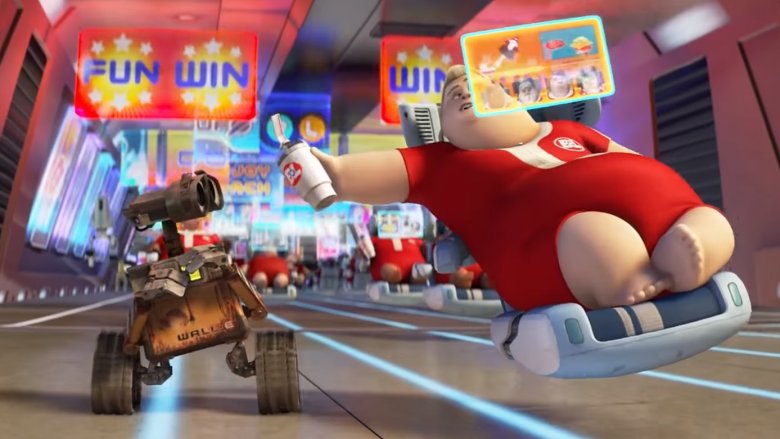
It's so easy to map to to Wall-E but from my perspective this is in a very different direction. You still have to move to get this to work. This will essentially allow you to walk when you considered Ubering or driving. You'll be less fatigued and less sweaty when you reach your destination.
There are already electric skateboards, scooters, one-wheels, bikes, etc. I see nothing wrong with electric skates (although range would probably be terrible without a separate battery pack)
Their website says "we automatically regulate your speed downhill." but it doesn't say where that energy goes. Brake pads I guess, or maybe rheostatic braking.
Could also charge the battery. I feel like regenerative braking is common enough that it could end up in a product like this (but at the same time, don't expect bells and whistles from v1).
I was wondering about that too. I guess I have to say no. If the battery explodes if it's charged above 4.2V and the current voltage is 4.2V, then I guess you shouldn't try to put any more energy into the battery.
I don't have an electric car but my understanding is that you don't actually charge them to full (it says 100% but the battery can safely accept more charge). Maybe they would do something similar here. But yeah, I don't really know. What happens if you have an electric car and live on the top of the mountain and the first 10 minutes of your grocery store involves trading elevation for battery charge? Does your car fail sooner than the person that lives at the bottom of a hill and expends most of their energy in the first 10 minutes? No idea.
> "most of us charge to a user-specified software limit of say 70%, 80%, 90%, etc. When you first set out on your next drive after charging to that capacity there's a warning that regenerative braking won't function 100% until some juice is used up to make room."
Compare this to a simple foldable electric scooter. It allows you get to places much faster, and has similar attributes in terms of things you do outside of commuting, is way cheaper and more reliable.
For the hyper-optimization of walking in crowded places at a slightly elevated pace, you basically have to convince someone that spending x amount of money instead of leaving x minutes earlier is worth it, and that x has to be in the range of play money for an average person, because the latter is free.
In general, if you are pushing a product that isn't relying on lifestyle marketing, or isn't radical new technology, the product needs to be an optimization on something existing, and when considering what it optimizes, you need to look at an entire picture, not just the particular item.
I'm pretty sure people made the same argument about electric scooters when they first came out. People will buy these just for fun the same way they buy all the other silly modes of transport. Honestly I think these look way more fun than say rollerblades for example. I don't think everyone is going to use them but they will for sure have a market. No sense in being cranky about a cool product just because it doesn't suit your taste or wallet.
I could easily enter public transport with these, that’s not always the case with scooters where I live. Scooters are also quite heavy and can hit things while carrying them around. I don‘t consider scooters suitable for my commute, and they haven’t really gotten the adoption from commuters they should have if they were that good.
Are the spaces tight enough around you where the scooter is inconvenient? I didn't expect e-scooters to become as popular as they did where I live but they've taken the area by storm, and it seems especially strong among the crowd that still commutes.
I see people bring scooters on the train. The issue is people have these huge hulking scooters that they refuse to fold up (not the kind bird uses these things look like they are 50 lbs), so they are standing there holding the handles while 3ish feet of scooter is sitting behind them taking up valuable floor space on the train. Plus it only works with a few people on board, if the entire train of people each had a scooter we'd have to redesign our stations to be way longer to fit the longer trains needed to accomodate all the wasted space. Bikes are the same way on the train honestly: great if you are the only one with a bike, clumsy if you aren't.
My skateboard on the other hand, I just stick it in between my legs and its like its not there.
Scooters are hard to balance with. I love my e-scooter. My partner has a bad sense of balance and she's fallen off her e-scooter and hurt herself (nothing bad, just bruises and cuts) before. She prefers to ride the bike. According to the video anyway, this looks like it's a lot easier to balance with. Scooters are also heavy. Most men have enough upper body strength to lift scooters, but a lot of others don't. My partner has a hard time lifting up the e-scooter above certain heights.
If they won't let you use a manual scooter I doubt they'd let you use these. The issue is probably that someone would suddenly round a corner and you'd tackle them going at running speed.
Not just the batteries and motors but the controller chips and sensors needed to make the experience smooth… products like these only work if you have a decent microcontroller determining how much power to feed the motor based on minute changes in input and balance.
A log European cities have banned scooters from the sidewalk. This would not have that limit and would mean less risk than riding with the cars on a scooter.
The price will come down via clone products from overseas manufacturers.
Oftentimes recently it's been the reverse; the well funded product is an expensive clone of a readily available but niche thing that can be bought generic.
I just checked. If you look up "motorized shoes -moonwalker" you'll see lots of designs. It looks like a busy but not well funded market
Yeah the cut right at 3:58 when he is about to step in to the pothole is pretty suspect. It shows immediately before and immediately after. Can't think of a reason they would cut it that way unless they're intentionally trying not to show it.
I think there are probably warehouse settings where a product like this (assuming it worked) would be valuable. These places are going to be mostly flat predictable floors anyway. If you can reduce the amount of man hours needed that saves on labor as well other health related costs.
Though perhaps by the time tech will work full scale robotics would be able to replace most of these workers anyway.
Way back in the early 80s when I worked in a bicycle store, we used to sell adult tricycles to Air Canada. The aircraft mechanics had a choice between golf carts and tricycles for getting around, but the trikes were popular because so many of them grew overweight and had health issues from being extremely sedentary.
Riding around on a trike let them get across big hangers quickly, carry tools and small parts comfortably, and give them a moderate amount of exercise every day.
A masterpiece of consumer behavior change in three acts:
Act 1: Introduce EarPods that look just like AirPods will but with a cord.
Act 2: Remove the headphone plug from iPhone (pre-packaging new and maligned lightning-based EarPods and adapters - all at decent margins).
Final (Act 3): Finally, introduce AirPods to a receptive audience - which is not only wireless (no cord to get tied up with your keys/hands) but looks just like the EarPods and doesn't require a damn adapter.
My reading is people are parsimonious with paradigms. Graham's motorcycle draws on the horse. AirPods drew on earbuds, which almost universally went to great lengths to avoid the hearing-aid look, and which also got a boost from performers [1].
This is comparing Apple (out of all companies) selling something we were using prior to the AirPods for a price which was in an acceptable range for the target audience with a dorky kinda-add-on for shoe to walk faster. I’m not sure if it holds.
That's a reasonable point... what would you say is a price (if any) at which
you could see these become mainstream? I'm personally ambivalent on the design but think the product could be worth trying!
I‘m not sure since I can’t quite figure out the target audience. Depending on the amounts a person walks every day it might be worth it but I’m on the bike or in the metro most of the time and the claimed 250% increase in speed doesn’t come close to the bicycle. That being said, I’d try them for sure and if they improve my life, I think I could live with the design. On a related note: people were Yeezy and Balenciaga shoes which (subjective) look awful to me.
Crocs became popular recently but for a decade or so you would be made fun of by ANYONE if you wore them.
It seems that the company survived long enough for them to become popular, but that's not the case with a lot of products (Google Glasses is an example I have in mind).
Having a great product at the wrong time is having a bad product.
Crocs became fashionable shortly after they released a $1200 collaboration with fashion house Balenciaga, but there is also high correlation with the popularity of crocs and the proliferation of chunky sneakers and silhouettes. Fashion is cyclical and Crocs were able to create an iconic and affordable product and lasted long enough for the fashion cycle to reach them.
Interestingly, Balenciaga released a collaboration with Vibram Five-Fingers and to little surprise toe shoes are still unfashionable (although more acceptable now than when I wore a pair a decade ago I think).
Not just that but they leaned into their Jibbitz acquisition and emphasized how customizable Crocs are. Most of my millenial cohort uses Crocs as comfy, functional shoes, but I've seen a lot of Gen-Z who go out of their way to customize their Crocs and make them stylish. I have to admit I catch myself wondering whether I should customize my own Crocs.
Also +1 on the chunky sneaker/silhouttes trend. Crocs with stylish charms on them look a lot like the chunky sneakers that are pretty "in" these days.
From what I remember it was either kids who were too young to pick out their own clothes who had them, and then also adults who stopped caring about what their clothes looked like. If you were in the age between those two points in life, you avoided them like the plague. My thesis is that these young kids simply grew up continuing to wear crocs, now they are in their early 20s and the marketing focus is on them now.
Segway was pricey and not super useful imo. Utility trumps everything else. If something dramatically improves people’s lives it will get adopted. Unless laws or regulations prevent it ofc (the way undocked electrical bikes were banned everywhere ;_;)
it's not the look of the accessory attached to you, it's that with segway you are standing rigidly upright at rest while maneuvering around - the pose is a ridiculous signal. these have a better chance in that you are still walking with your usual gait
I hate to piss on something someone's obviously worked pretty hard on, but my gut is screaming these are going to be a flop.
Too complex to be durable, too heavy, too unfashionable, too expensive. Having to "switch modes" to deal with stairs. The situations in the rosy advertising are probably not a great place to use them (eg. I can imagine difficulty with the sudden stops / sidesteps / evasions you sometimes need to make in a crowd, especially if you're going faster than the flow. And I don't care how good you think your hardware is, rocks and dirt and the realities of weather destroy my simple shoes over time - good luck with robotic ones).
I just don't see how these offer superiority to passive, well-established alternatives like rollerblading, etc. that aren't difficult to learn.
It's a bit sad saying all this as the tech does seem neat and they look like they could be fun to try.
As a passionate rollerblader who's been practising for over 10 years, I've lost count of the multiple attempts at reinventing shoes with wheels, maybe people should just learn how to skate? :)
The child in me is excited, but the adult in me is skeptical of the stairs mode. Unless there's some very obvious physical signal that the skates are in stairs mode, I can see some people injuring themselves trying to mimic the stairs demo because the skates weren't actually in stairs mode.
I don't know if 5 miles is long enough for the people who actually need it, but if I was a postal worker, these would be pretty sweet. And 1400 USD is cheaper than some car insurance here in Canada for young males.
At least in my neighborhood I think these would be more trouble than they're worth. It's a historic neighborhood so all the houses are built up on berms from when they dug the basements cuz the streets were full of muddy manure, so every walk up to a mailbox has stairs. Unless you're agile enough to go down stairs without doing the lock/unlock dance, these would probably slow you down overall.
I watched the video, which is why I called it the lock unlock dance. Note that in that video, which is obviously going to be the best looking version of it they can show, it's still a pretty significant pause in your motion, because the control is both motion and timing based. Doing that two times per house for the 10 miles or so a carrier walks is gonna get old.
It has a 3.0 Ah battery (not Wh, assume one 18650 lipo cell -> 11 Wh), comparable with a smartphone or flashlight. At a full 300W discharge, you're emptying the batteries in just over 2 minutes. You'd better have well-insulated soles before stepping on a pair of 150W space heaters, also, no 18650s are rated for 100C discharge, 20C is a lot and 5C is more common for the high-capacity low-discharge 3.0 Ah cells.
You get 5 mile range by using them like roller skates, using your own legs to power them. The motors are just to aid in walking up stairs and such.
If we're normalising speeding around the city at 2.5x speed, can't we just start walking faster instead? Like, with our legs? It's free and no extra equipment required.
(Yes some people have mobility issues. I don't think they're the primary target market.)
He’s pointing out the same thing the similar annually reddit thread brings up: why aren’t people running or jogging in the street instead of walking? Conformism mostly. But who cares honestly, you don’t get that much by jogging, you can already do it but it’s not a replacement for faster ways of locomotion
Much as people on the internet deem it so, I'm pretty sure people don't want to expend extra effort than necessary walking down the street, nor do they want to arrive sweaty at whatever place they're heading to either.
I did that once. I wanted to go for a run, and I also wanted to buy some soup spoons from Ikea. So I ran to Ikea (about 4km away), and had to walk through the store all smelly and sweaty. It felt inconsiderate to the people around me. Then I ran home holding the spoons. Running while holding things is awkward. So there's two reasons. I haven't done that sort of thing since.
I do this sometimes, but usually for a few groceries. What I do is put a carrier bag in my pocket and do a gentle run to the shop so that I'm not too sweaty. Then walk home with the groceries in the carrier bag.
Huh. If they make it down to a few hundred bucks with no history of them exploding/unexpectedly accelerating or stopping/etc then maybe I'll get some for a break from biking everywhere. I dunno how well they'd cope with New Orleans streets and sidewalks, though.
Their video just below the big hero section (see direct link below) mentions it being able to handle "roughest urban terrain, from cracked sidewalks to gravel". I visit New Orleans yearly (friends live there) and walk a lot around mid-city. I feel like they are viable but I'd love to see them in action to know for sure.
Seems overzealous imho. A razor a5 lux is likely faster, $100 and gives you the infinite potential energy differential available on any hill. And it only weighs as much as a gallon of water.
I’m curious how much better this is from simply skating with inline skates.
The walking motion obviously adds the normal walking speed on top of whatever the motor puts in.
On top of that I bet most of the forward rolling motion actually comes from you yourself putting in force by walking, not from the motor pushing forward. The wheels then just continue coasting. Most likely the motor just providing balance and preventing the wheels from rolling backwards as you push forward, like an advanced version of the under grip on cross-country-skis.
Planting the feet to only rely on motor force would significantly reduce the distance and with both feet next to each other increase the likelihood of face plants when hitting small obstacles.
I think the aim of this company is to be bought out by Amazon with all stock and production capacity. After that a single unit won't see the consumer before everybody in fulfillment centers has these on their feet.
My concern is this could probably be a major liability. Strapping all your employees to electric roller skates that make them move faster seems like it could be a recipe for disaster if someone takes a spill at high speed. Especially since a jury would take one look at those things and see something closer to x games equipment than like “enterprise mobility device”.
It's a little faster than a jog, it would be a pretty good tackle and if the other person landed wrong, game over. With running at least you can juke out of the way laterally.
Yeah, this seems like something that is cheap and low-tech that does close to the same thing. And a wheel in the heel allows for more control for the wearer with fewer things that can go wrong.
Heelys are fun — I got a pair when my kid got a pair — but they have a couple of drawbacks, they are very fussy about surface quality, not great with slopes, and impose a significant heel, which impacts posture and walking geometry (almost all my other shoes are zero drop, so this is very noticeable to me)
At the price point and unique function, the first thing I compared these to are Yeezys, Balenciaga sneakers, and rare Jordan colorways. I think if that if the sneaker status culture accepts these (not saying they will) then the company will have a real chance at breaking into the consumer shoe market (not sure that's their goal?).
Alternatively, I'm wondering who's walking around all day in their job function and if there is some type of ROI on equipping them with shoes like these.
The shoes are around 4lbs each. I wonder how much of that is the battery and if you couldn't get them to more negligible weight with a connected/worn battery.
Compared to the weight of the user, does the weight of the shoes matter? And would a worn battery help longevity vs built-in given that it still contributes to the total weight of the user+shoe?
4 lbs of weight on each foot is a lot of weight. Probably not too bad when in a gait, but walking up stairs or long use would put high stress on your joints.
Carrying 100 lbs on your back is easier than in your hands which is easier than on your foot.
I am actually fascinated with these, enough to seriously consider a deposit. But I am very concerned about their ability to tackle an "AI-drivetrain" when they can't even get counting numbers right. To wit, from their Quick Start page:
(Also, the "Rough Terrain" text...hmm. Maybe this is all a ChatGPT-produced hoax?)
>1. Charging
>Charging Moonwalkers is the first step after unboxing. They use a USB-C connection and will charge in about an hour with a charger over 50W.
>2. Powering On
>Turning Moonwalkers on is the second step after charging. Its simple, but we thought a video would be helpful anyways.
>2. How To Walk
>A quick lesson on how to start walking in Moonwalkers.
>2. Adjusting Fit
>The better your fit, the better the algorithm works. You want Moonwalkers to have a snug fit to your shoes. Not too loose, not too tight.
>2. Understanding Indicators
>Moonwalkers have indicator lights on both shoes to communicate with you. This video shows you how to understand them.
>2. Switching Modes
>Change modes with foot-driven gesture control for seamless transitions between SHIFT and LOCK modes.
>2. Rough Terrain
>Pair text with an image to focus on your chosen product, collection, or blog post. Add details on availability, style, or even provide a review.
>2. Cleaning
>How to keep your Moonwalkers clean to extend their life.
>2. Changing Your Wheels
>Just like car tires, Moonwalkers' wheels will need to be replaced after extended use. This video will show you how.
Damn, this could substitute for my bicycle commute. I could just walk the distance in the same time. That would be sick. But I don't want to try at $1.4k
Right, but because of one-ways the fastest route for me walking is half a mile shorter than on a bicycle. It's the compactness that appeals to me. I live in SF so I often don't take my bicycle somewhere because it'll be stolen. It only has to put me in the same ball park (~10 min) to make it worth it.
I disagree as a proficient skater. I can do various street style tricks and play roller soccer as well as dance. Their innovation is the stacked wheels to mimic the contact patch of a much larger wheel. They give you similar ability to traverse road imperfections as a tracked vehicle. I have fallen victim to small rocks despite being an expert skater.
Heh, that was my local shoe shop for quite a while... never thought i'd see it in a comment on HN.
"Heelys" were their common name (it's a brand) and they were very popular in the early 2000's. Kids had them everywhere - it was impossible to go to the shops without seeing a kid sliding around.
A comparison to offer though is "why would you pay 10x the price for an electric bike?". I don't think it's an entirely fair analogy (electric bikes let people go farther than they typically could). If you use Heelys, they take a fair bit of effort - it's more comparable to rollerblading. I reckon the Moonwalkers are more 'assisted fast walking' - i can see lot's of middle aged people being more attracted to that than 'roller blading on a budget'.
That said I personally will just continue to walk normally!
Always wanted heelys but never got them when I was a kid. 20y later I decided to buy them as an adult. Well first, very bad idea in SF due to the hills. But also, not comfortable at all, and kinda dangerous. Returned them pretty quickly
Having the idea is like 0.01% of getting a product like this to market. I have an idea for a flying car, clothes that don't get dirty, kitchen tables that wipe themselves down, etc etc.
Of course, but that wasn't my point. My point was that I thought about it for a few minutes before deciding it was stupid, not that it was some killer idea which I just couldn't execute on. We'll see if I was right on that I guess.
This was my thought as well. Reminds me of Google Glass. A bit too strange looking to get much use by regular people, but there may be legit applications among niche groups of professionals.
It reminded me of Google Glass as in it reminded me of DoA product. To be honest though, I thought that they looked far less strange and more useful than these shoes. I still grieve for their passing.
Good question, but I think this breaks as well. It would be interesting to have a freewheel mechanism roller skates though. I think some hand-operated breaks would be a good addition too (or maybe some mechanical timer that breaks when you're not doing a walking motion anymore)
A 250% increase would then be 6.75 to 10mph, which is a jog to a run.
I wonder how stable these are at speed vs a kick scooter or an electric city bike? At some point, I'd think the larger two-wheeled mobility devices would actually be more stable vs trying to hop from foot-to-foot?
A normal skateboard is honestly underrated, especially if you throw on some bigger softer wheels to get over the crud. You can go pretty quick with no effort on flatish ground.
I think these could find a niche in large cities with a lot of tourism. Being able to see twice the city by foot would be incredible when you have limited time on vacation. Many people tried to do this with Segways but it never really took off. This seems a lot better.
Battery life is going to be a very serious limiting factor. It's one thing to walk all day in a new city you are visiting, and think only about recharging yourself. But walking an hour in these, and then carry them (and they should be heavy, relatively speaking) until next charge - I think it would not be worth it.
> Many people tried to do this with Segways but it never really took off
In my experience, this is the only actual use of Segways. I never see Segways used for anything else but city tours. I think maybe some mall security guards sometimes use them too.
It's not something I'd be an early adopter on, nor do I expect the first company to do something like this has a huge likelihood of success, but I'm certainly excited to see people working on more minimal mobility options.
Yeah, these feel like the things you read about when you read about the history of some other accepted and much used piece of technology. Some useful things are born of ambitious monstrosities.
I tend to be skeptical of new tech, but I started grinning watching the video. I am far more entertained by and interested in these than I expected to be.
Maybe that's because I used to commute by train, and these seem perfect for shortening the walk on either end / helping you avoid becoming a sweat-mess during the walk.
I'm really curious how hard it is to replace or swap the batteries. The website says they use 18650 cells, so if you can access the batteries with a screwdriver, I could easily imagine doubling or tripling your range with a backpack and some spares charged overnight.
My parents aren't too excited about using motorized scooters but have limited mobility due slow pace and/or joint pain. Could be an avenue for letting them be more mobile.
Yeah, I wish they would address whether the shoes are appropriate for taking a slow/disabled walker up to average walking speeds. But if they explicitly addressed that use case, then the shoes might become a “medical device” and run into regulatory issues. I’m not sure…
Odds of this company being relevant are nil. If this product ever becomes popular it will be because of a $300 chinese knockoff. However I very much doubt that it will be able to overcome the cultural association of sillyness and the aesthetic disaster that is "rolly-sandals with shoes".
Re looking silly, I am not so sure. Only 10 years ago no one would have expected adults to proudly navigate the city on flashy colored elwctric kick scooters, and yet look at any big (european?) city nowadays. Even investment bankers in tailor-made suits move on those abominations as if it was the next lamborghini.
I actually find them quite attractive as a means to access my local train station: easier to take with me than a bike or kick scooter, apparently much safer than rollerblades or skateboard. Just not for that price, but let's give it a few years to see if it takes on.
Not useless but it went extinct in my part of the world. I can't remember when I saw one in Europe. People shot selfies with their arms again. Is it still a thing somewhere else?
It's a thing in the U.S. still but a lot of places have banned them. Where you do see the selfie stick sometimes is skiing, but I think they are using an actual gopro product for that mostly.
Agree. Especially considering that rollerskates and rollerblades kind of already fulfill this function (just are bulkier, and take more skill to use, but honestly are easy enough to learn) and people don't usually use those for commuting in urban areas.
That said, when I lived in Chicago, I used to see a lady who rollerbladed to the office. I am sure you're thinking, "Young techie, jeans & t-shirt", but you'd be wrong. 40's or late 30's, dressed like an exec. Wearing a dress, make-up, string of pearls, with a fancy handbag, nice haircut. I don't think this is a relevant data point (clearly an outlier), I just thought it was awesome and wanted to share.
> That said, when I lived in Chicago, I used to see a lady who rollerbladed to the office.
I used to skateboard from a lot by the Metra station to the office @ State and Madison.
Most fellow commuters I encountered were visibly bothered by sharing the walkways with someone adult-sized traveling 2-3X their speed. I'd expect a similar level of antisocial friction with these shoes.
Though it has been well over a decade since I did that, maybe people have since warmed up to sharing sidewalks with ebikes/scooters by now.
Most ebike/scooter use is done in the street from what I've seen. Streets are the right place for ebikes, which are basically mopeds, though I don't think escooters are safe on the street for users nor on the sidewalk for pedestrians.
It would feel extremely sketchy to ride an escooter on the sidewalk with all the blind corners or entryways people are liable to pop out from.
The best thing you could do with an escooter is to do what bike riders do to be safe, which is to take the entire lane. Car's might get pissed and honk when they pass you, but its better to force them to merge into a separate lane to get around you, than to try to squeeze through the same lane you are in and force you into parked cars or the gutter.
Oh trust me, I wouldn't feel good about riding an e-scooter on a sidewalk either, they're too fast and it's a nuance to the pedestrians sidewalks are built for. But I also wouldn't feel personally safe riding an e-scooter on a street; the small wheels of a usual scooter make it inherently unstable at the sort of speeds the electric motor can easily propel it to.
Basically I don't think there is any safe and responsible way to use an e-scooter. I don't think they should exist, it's just a bad idea. e-bikes are great though.
From personal experience, Chicago is kind of both the best case and the worst case for rollerblading: it's very flat and has nice wide sidewalks, but the sidewalks and even the streets are pretty rough and require large wheels for a smooth ride.
Having a good amount of reasonably well maintained dedicated bike lanes would have made rollerblading to work a lot easier!
Chicago's pavement will always be in difficult shape due to the climate and, more importantly, the incredible amounts of road salt used to keep the roads ice-free.
I am seeing more and more e-bikes though, which, since you can keep up with traffic relatively well, allow you ride in the car lane under most circumstances. That's what I do, and if some dickhead really feels the need to pass me when I'm going >25mph, I'll give them a wave at the next light. And probably be shot in the chest one of these days.
I wonder where the break-even point hits that it becomes cheaper to plumb hot water pipes or electrified heating elements under better-built sidewalks than to resurface every year.
Totally agree. I biked around the streets, and it's tough. Bike lanes are somewhat respected by drivers, and somewhat respected by people parking on the street, which in aggregate makes them not all that well respected...
People get creamed on bikes all the time in bike lanes. Pedestrians on the sidewalks and bike paths just don't pay attention to anything other than what is 3-4 feet from them, and are always forcing you to dodge if you have any kind of speed if you're just even jogging.
It's more a cultural problem than a city planning problem. Contrast how seriously bike lanes are treated in (say) Munich, which is very seriously.
That's expressing a lot of confidence for something that I assume you don't know much about?
I've repeatedly looked for this exact product in the past, "wheel-augmented shoes", for my 10-to-30 minutes travels (to the shop, to the public transportation, to a friend's...). So as anecdata, I would absolutely be interested in this: maybe not at $1400 but I'd certainly pay a few hundreds.
> cultural association of sillyness and the aesthetic disaster that is "rolly-sandals with shoes".
I don't know how many "that's what was said of Airpods" are needed for this argument to die. Actually, I'm much less weirded out by these shoes than I was of airpods, I don't find them silly at all
It's probably because the aesthetic here is relatively bland, and sandals are an existing form-factor of shoe. Airpods are aggressively sleek and white, and they sit in a weird uncanny valley of accessory and tool. Technically, wired earbuds have the same hanging-stem, but everyone's used to them, so no one notices them.
As to the aesthetics, I'm sure people thought the same of all types of bicycles. Penny-farthings used to be the cultural norm, and people still ride less-common forms like small-wheel and recumbent bicycles.
> I don't know how many "that's what was said of Airpods" are needed for this argument to die
Apple has always been the exception that proves the rule in the types of cases. Very, very few companies are able to create demand rather than merely satisfying it.
On top of that only experience with Airpods is as the current gen teenage reality blockers and older people screaming through static about how they must have run theirs through the wash.
For everyday use, maybe. For someone whos job requires them to walk along flat surfaces all day, this could be a worthy investment for a company to make.
Companies with big warehouses are already buying cheap regular old bikes for getting around, or even trikes where you can carry stuff on a little truck bed in the back.
Aesthetic taste and fashion are hard to predict; people said the same thing of Crocs. In fact, many workplaces banned Crocs because they were considered so aesthetically offensive. Crocs, Inc. is up 725% over its lifetime.
People are really into weird shoes right now (see pretty much all of sneakerhead culture). I could see this taking off if partnered with the right influencer and offered at about $500-$600.
On Chinese knockoffs: yes, this is a danger with nearly any product made today. If they achieve brand prominence then the risk will be mitigated. Their apparent moat seems to be making walking feel natural. This may be temporarily difficult to reverse engineer and give them some lead time.
It might be a viable product industrially, eg pickers working in large warehouses or similar. But it has to be actually better than just a basic Lime style electric scooter.
This concept is interesting to me, but I don't think I'm the target market because I'm already a fast walker and walk more than 5 miles on a daily basis. Most of the time, I am making effort to slow my walking speed so others can keep up when in a group, rather than speeding myself up. I like the idea though, and if this takes off I could see it being helpful for a lot of people.
I walk more than anyone I know, and faster than anyone I know. These things look good in pure technological terms and I don't think it matters that they seem silly, all innovation looks like mere novelty on its first outing.
But where they would not work for me is the ability to feel the ground all the time, from texture and incline to cracks and random objects. I wear regular trainers or skate shoes most of the time, but even in heavy boots/sandals designed not to have any flex in the sole, tactile feedback is important. I just can't see the wheels and gears delivering that the same way, nor lasting through the varieties of surfaces and forces that hard walking involves. I feel they would work great in a campus environment where you can high construction standards.
A less obvious issue is that fast walking isn't just a fitness/surface matter. Most people are slow so maintaining a steady pace requires a surprising amount of lateral movement and mini-pivots, shifting one's weight around and so on. I suspect the blissful gliding depicted in the product videos involved a level of mutual awareness of and respect for other people's space and momentum that is often lacking in busy environments.
I'm a crazy fast walker too, my wife is always reminding me to slow down even when I'm walking at a normal pace. I'm guessing it's in part because I have really short legs and a really long torso relative to my height so I'm doing something subconsciously to compensate for it? Everyone else seems to walk crazy slow to me though. I'm definitely not the target demo for these shoes.
Good news! You can twist your left heel and the Moonwalkers(TM) will engage regenerative mode, where you will be forced to walk slower, and your effort will recharge the Moonwalkers(TM) battery, or your friend's phones! Everyone will love it!
Huh, I was reading this thread thinking I'd found some like-minded individuals. I also have a relatively long torso and slightly shorter legs (only a couple inches either way from average, mind you). I never really thought about that being connected but it could very well be. A big reason I move at the speed I do is because I rely on my torso's inertia a lot, and I often feel when walking slower with a crowd that my natural ability to leverage inertia for efficiency has been impeded, and I feel like it's more stressful on my knees, etc.
all of the things this product wants to solved would be better served by removing cars from our cities. Like everything can be in walking distance, when they're built within walking distance in the first place.
The founder almost got killed by a car. it wasn't because he was on a scooter.
Cool! If they ever come out with a more robust version that works well on trails and unpaved surfaces, I'd look into it. Depending on the range, it looks like it would be pretty useful for doing fieldwork like rare plant surveys.
I'll be honest, at this price point I'd just snag a Boosted Board and get on with my life. Way less effort and like 50% cheaper in some configurations.
Sorry, no win. They look awkward like Michael Jackson doing the moonwalk forward.
It's funny how many times I've seen a "revolutionary" transport product released in the tech word with the exact same set up and experience: I see a hyped up marketing video from the company, then look on for the inevitable wired video article trying the product out (that is clearly also mostly PR). All without seeing the price.
Each time I think "hmm... I'd spend 250-500 to try that out if people like it" only to find out that the true price is close to an order of magnitude more than what my initial estimate.
It was the same with Boosted as it is with these and the many other similar products I've completely forgotten about.
What problem does this product solve? The problem of not living fast enough? I think, in that case I'd rather have a shoe that forcefully makes me walk slower...
So... I'm curious, how do these fail? Let's say an axle or motor fails, does the wheel spin or lock up? Which would be better for making sure I don't break my nose on the pavement?
These look like they would have the same risks as electric scooters, all while remaining invisible to everyone around you. Hope to be proved wrong but these look like a lawsuit waiting to happen.
The video voiceover is terrible quality with terrible enunciation. Great production values otherwise demand that a better voice actor w/ better recording equipment should have been used.
Looks like a great engineering effort. Electric skates are for the same niche who would buy electric bikes. I want to keep my legs strong and keep the points of potential failure fewer.
Neat, must be like how bike gears only move forward when you pedal them. It looks hella dorky though. I think some Adidas running shoes are much more practical and already the fastest.
Obviously v1.0 will be less savvy. But even later, I think the idea of reforming natural walks is crazy. They would be better off ... selling a hover board.
Unless these have independent suspension per wheel, they're going to suffer the same problem. Best way to increase pebble-stop resistance is to increase wheel diameter and compliance; ala scooter.
In the video it said something about running data through a neuromuscular model. And: "Our AI uses machine learning algorithms to adapt to a user's walking gaits, making them an extension of people's legs."
For all that, the person's gait looks strange to me, like they aren't using their muscles normally. Maybe they are focused on landing the skate evenly on the wheels, or not getting off balance? Walking gait involves heel-strike and toe-lift-off phases and I would think if you mess with these they aren't going to feel comfortable after wearing a while.
If you want to walk faster, start rucking. If you get used to walking with a weighted backpack on regularly, you will be rapid without one. It also has the added benefit that you don't look like an extra from Nathan Barley.
I love the current state of startups/capitalism, it's impossible to tell if a product is a satire, a joke, a scam to raise investors money and disappear, an AI generated product coupled with AI generated images and text, &c.
For $1400, I can speed-drive myself in a pre-owned car. Or ride a motorcycle, or get an E-bike. The price is gonna have to come way down for it to be palatable.
Their early market is going to be urban tech enthusiast commuters. I think $1400 is low enough to get sales started. I wouldn't buy these but I've bought plenty of other silly things.
Let me guess: I need to pair it with my phone, create an account, accept a ridiculous EULA that forfeits my right to participate in a class action suit, and update the firmware to add a new mapping feature that tracks my whereabouts (as a feature of course, with a heat map or whatever.)
I feel like these days, when I see a flashy new product, I need to be immediately informed that it doesn't require a smartphone or cloud app. I don't want to be hostage to my fucking shoes because Oracle acquired the company that runs the server for them.
It’s worse. They’ll try to get recurring revenue from what should be a one-off expense for the customer. You’ll be offered personalized coaching. They’ll partner with one of those dieting companies that wants to replace your groceries. God help you if you enable alerts because the app to control the device will hound you endlessly until you sign up.
Imagine if you spent a ton of time and effort to launch a product and people on Hacker News start attacking it brutally based on things that aren't even true.
What a sad sob story. It's so unfortunate for founders that they have to deal with such things as skepticism and preconceived notions.
How about this: if you care about my demographic of people, I'm happy to be appeased to in the form of commitments to have offline-only functionality for the hardware I'm paying for. But if you advertise the 1 millionth tech product and expect me to not assume it is like the 999,999 previous ones out of good faith alone, sorry, I'm fresh out of miniature violins.
I don't really want to be this flippant, but do you know how burned I am by this at this point? I've started returning things based on not being able to use them without an account. Just scroll through Google Home integrations some time and take a look at the vast mountains of internet of shit devices. Sometimes, it's proudly advertised that it needs a smartphone. Other times, you'd be hard pressed to know it even supports it, less requires it. Tooth brushes, bathroom scales, literally anything a Bluetooth radio will fit in.
If you want to be mad at anyone, don't get mad at me. Get mad at Juicero and all of the other folks dropping turds in the proverbial punchbowl. I am not sorry.
It's also unfortunate for the HN community that a bitter, reflexive dismissal with no basis in evidence that pertains to this actual product is the top comment on this story.
So what's the alternative? Just accept it without complaining ever and hope that it gets better, while people leach free advertising for their fresh internet of shit garbage to a hacker community? Why?
If it said something about having open source firmware you could flash yourself, the entire premise would be different. Without something like that, this is basically just free advertising.
I agree that it is unfortunate that I need to be bitter about this. Totally. Not our faults though, and again, I provide an out: give me a reason to believe this is different.
Of course it is natural for hacker types to be skeptical and cynical but I swear to God, I just want an inch of confidence. As it stands now I would bet you substantial amounts of money they are planning on putting a Bluetooth radio in the shoe.
> So what's the alternative? Just accept it without complaining ever and hope that it gets better, while people leach free advertising for their fresh internet of shit garbage to a hacker community?
Again, how do you know this product is one of those "internet of shit" ones?
They'll start collecting DNA samples of you from your feet and then create a clone. They'll lure you away on a fraudulent whiteboard coding interview assignment and then insert the clone into your family. When you return, the clone will have you arrested for impersonation and you will spend the rest of your life in Guantanamo while the clone lives your life. At a crucial moment, they will speak a trigger word that will cause the clone to kill the President, who they will then replace with a clone President, who will then use his now vast power to remove max-speed regulations on these devices, allowing them to go up to 10 mph.
This sort of "late-stage capitalism" cynicism used to be concentrated on reddit but is everywhere now. These shoes are extremely technically impressive, highly novel, and very useful, and yet they're still met with a combative dismissiveness even on a site ostensibly dedicated to such things. Sign of the zeitgeist.
I think it's a helpful cynicism. Remember when everyone rushed to 23andMe and those other DNA testing services and only later did we realize this is a new frontier of selling people's data?
Please make the effort to look into it before you post a deriding comment. There's a lot more to them than that and they are actually a very interesting piece of engineering both in hardware and software.
its been my experience that aliexpress usually offers a similar product with about 90% of the functionality and often times more features, with no rent-seeking required.
so ill wait for my mega-walker pro's to come out instead i guess.
The exciting part is that 82% of the mega-walker pro's will work great and the rest of them well self-immolate and burn down your garage randomly. Life is an adventure!
This is a very cool thing that I would genuinely want to try, marketed about as far away from me as possible.
Why do they spend so much of their first-impression marketing copy repeating how they aren't skates no less than five times on the homepage? Because people fall over when they wear skates? Because my first thought was, "Finally, heelies but for adults! And also for any shoe, and also motorized!"
Why is going off-road with them an option, much less a desirable feature?
Why does this need "AI machine learning algorithms" to implement a PID controller?
Why are they $1,400(?!?) but only come in one size and ship only to the US?
Perfect example of what should be: show, don't tell
Don't talk to me for 5 minutes about what your shoes do, I know what shoes do. Show me people walking through common obstacles, going around sharp corners, up and down inclines, up and down stairs, and stopping on a dime when need be. All that around 10s of other people both wearing these and normal shoes.
If you can't do that, it's because you can't. Because your product is stupid.
Absolutely. Stopping on a dime is my biggest concern. With a scooter or bike, I can hit the breaks. None of the material covers how to handle emergency situations. The closest is slowing down to walk up stairs
> Military-grade, multiple redundancy electronics hardware, running our in-house OS with jet propulsion level stability add the final layer of peace of mind.
That is a lot of buzz-words, and sort of hinting at JPL but failing.
At the end of the video, the exploded view shows a crazy gear train, synchronizing those 10 wheels per shoe sounds tough.
I watched a review from a shoe guy about these. He was very impressed with the wheel design - basically the inset raised wheels allow them to mimic a larger radius wheel and handle potholes and such smoothly.
The designer did talk about how failures would be very bad (and it sounded like he had experienced plenty of fails with the earlier designs to be speaking from experience) which might be why they are pushing the terminology there.
I can make a very good looking and well designed cake out of human feces, I'd still go for the 100 years old tested and proven brownie recipe that looks like a brick though. No matter how well something is designed, if it's stupid it's stupid